We Analyzed 20+ Robotics Founders’ LinkedIn Strategy. Here’s Who’s Actually Reaching Buyers.
We scored 20+ robotics founders across 6 dimensions. 62% scored an F. The most visible founder in the world only scored a C. And the founder whose buyers are most engaged? A company most people haven’t heard of.

What We Measured
Most LinkedIn scores measure vanity metrics — followers, likes, posting frequency. We measured something different: are the right buyers actually seeing this founder’s content?
We scored each founder across 6 dimensions, weighted by their impact on reaching and converting buyers:
Are the right people engaging? ICP buyers vs random followers.
Would someone call you THE expert in your category?
Are enough people seeing this? Viral potential + impressions.
Does your content address what your buyers actually care about?
Does your profile convert visitors into conversations?
Minimum viable presence. Are you showing up?
How We Scored This — Full Methodology
A founder whose posts consistently get comments from warehouse ops directors scores higher than one with 150,000 followers and zero buyer engagement. Because deals come from buyers, not fans.
Data sources: LinkedIn post analysis (30 most recent posts per founder), engagement metrics, commenting activity, website scrape for ICP identification, and Exa search for authority signals. All data is publicly available.
The Results
62% of robotics founders have essentially zero LinkedIn presence. These are people running companies that have raised tens or hundreds of millions — and they’re invisible to buyers making purchasing decisions right now.
The most visible founder in robotics scored a C. The founder whose buyers are most engaged? A company most people haven’t heard of.
Full Leaderboard — All Founders Ranked
Curious where you’d score?
Paste your LinkedIn URL. See your score in 15 seconds.
First: Not All LinkedIn Reaches Buyers
Three of the highest-profile founders score well on raw LinkedIn metrics but are using the platform for an entirely different purpose: raising capital, recruiting talent, and shaping public perception. Using our buyer-focused scoring, they score lower because their content isn’t aimed at the people who write purchase orders.
PR milestone — 3,978 likes from tech enthusiasts and investors, not the enterprise ops directors who would buy a Figure robot.
His Content-ICP Fit scored 4/10. 16 out of 30 posts were company updates. His LinkedIn is A-tier for fundraising — but that’s not what we’re measuring here.
Also in this category: Karol Hausman (Physical Intelligence —9/10 Authority but posts once a month) and Damion Shelton (Agility Robotics - shifted to policy thought leadership).
The rest of this analysis focuses on reaching buyers. If your company sells robots to businesses, this is for you.
The 4 Archetypes
Every founder we analyzed fell into one of four patterns when measured against how well they reach and engage buyers:
The Authority Builder
“I teach frameworks and lead conversations. My buyers come to me.”
These founders post with a clear purpose: attract the people who buy their product.Their content makes buyers think “this person understands my problem.”
Brad Porter (Collaborative Robotics)
Former Amazon Robotics VP. 9/10 Authority, 8/10 Content-ICP Fit, 9/10 Consistency.
Textbook Authority Positioning — drawing a line between talkers and doers, putting himself on the doer side.
An insider story only someone who was there could tell. Not theory. Experience. This is why his manufacturing ICP trusts him.
- Strength:Content speaks to manufacturing operators, not investors
- Gap:Zero breakout viral posts despite 45K followers - consistently good but never explosive
Edward Mehr (Machina Labs)
Highest score in the study
Ex-SpaceX. The “robotic blacksmith.” 9/10 Authority, 8/10 ICP Fit, 9/10 Consistency.
Not about his product. About manufacturing engineering culture — exactly what his ICP (automotive and defense leaders) cares about. Authority by teaching, not selling.
Personality and humor in a technical industry. His manufacturing ICP loves this. Proof that being human works.
Machina Labs isn’t the most funded or famous — but Ed’s LinkedIn outperforms founders at 10x his funding level. You don’t need $1B in funding to own LinkedIn. You need a clear point of view and the discipline to show up.
Tessa Lau (Dusty Robotics)
Construction robotics. When she’s on, she’s one of the best in the industry. When she’s not, she disappears for weeks.
This post got 268 reactions — but it's her outlier, not her average. Only 1 out of 30 posts hit viral territory.
The 268-like Anthropic post is a masterclass in Content-ICP Fit. But here’s the problem: it’s an outlier. Her typical post gets a fraction of that engagement. She posts ~1.6 times per week with gaps as long as 20 days. When she disappears for three weeks, she loses algorithmic momentum and has to rebuild reach from scratch every time.
She also comments on other people’s posts only 0.2 times per week — meaning GCs and project managers almost never see her in their feeds unless she’s posted that day.
The good news: the hardest thing to fix (content quality) is already A-tier. The easier things — consistent posting schedule, commenting on GC posts daily — would push her to a B+ within a month.
The Authority Builder pattern:
- → Post 3+ times per week consistently
- → Express strong POVs that invite debate
- → Create content your buyers find useful, not content your peers find interesting
- → Comment on posts in your buyers’ feeds (not just your own)
You don’t need $1B in funding to own LinkedIn. You need a clear point of view and the discipline to show up.
The Outperformer
“We haven’t raised $500M or landed a TechCrunch headline. But our founder’s LinkedIn reaches more real buyers than companies with 10x our funding.”
Jake Loosararian (Gecko Robotics)
Excellent when he posts — but inconsistent. His best content outperforms founders with 5x his following. The B score reflects gaps in posting frequency and audience reach, not content quality.
Proof of traction paired with values-driven messaging. 'If it isn't ready, it doesn't count' — his ICP (infrastructure operators, defense procurement) responds to results + principles.
Adam Bry (Skydio)
9/10 Content-ICP Fit — every post speaks directly to the public safety directors and defense procurement officers who buy drones. Averages 375 likes per post because his audience is real buyers, not spectators.
$52M Army order — the largest single-vendor sUAS order in history. This isn't a vanity post. His audience (defense procurement, public safety) reads this and starts procurement conversations.
'Flying robots responding to 911 calls is no longer a concept.' His content maps exactly to what his buyers care about — deployment reality, not product specs.
These founders treat LinkedIn as a buyer channel, not a vanity metric.They don’t have billion-dollar valuations or Sequoia on their cap table. What they have is discipline: they post about problems their buyers have, not technology their engineers built. And because their content speaks directly to the people writing purchase orders, their buyer-engagement-per-follower ratio crushes founders with 10x their audience.
The Outperformer pattern: (what they do differently)
- → Every post maps to a specific buyer pain point
- → Share deployment results and traction, not product features
- → Pair company milestones with why your ICP should care
- → Consistency matters more than virality
Curious where you’d score?
Paste your LinkedIn URL. See your score in 15 seconds.
The Untapped Authority
“I have the credibility. My audience respects me. But I’m not converting any of it into deals.”
These founders have real authority — strong opinions, genuine expertise, engaged audiences. But their content speaks to the wrong people.They’re educating fellow founders when they should be solving problems for the buyers who write checks. A few specific tweaks would put them in front of the right buyers.
Deepak Pathak (Skild AI)
CMU professor turned CEO. 8/10 Authority, 8/10 Consistency - he posts regularly and has genuine expertise. But his audience is researchers, not the manufacturing executives who would buy Skild’s robotics platform. Comment-to-like ratio of 4 comments per 173 likes means people scroll past, they don’t engage.
Strong demo content (robots assembling GPU racks at NVIDIA GTC). But who's engaging? Researchers and AI enthusiasts, not the warehouse ops directors who buy automation systems.
Shift 50% of posts from “look what our AI can do” to “here’s how this solves your manufacturing bottleneck.” Same technology, different framing. One post showing ROI for a specific deployment would outperform ten research demos.
Ali Kashani (Serve Robotics)
8/10 Authority. EY Entrepreneur of the Year. Posts a strong mix of personal founder stories and company milestones — both get solid engagement. But scroll through his feed and you’ll notice what’s missing: not a single post addresses the problems his actual buyers face. No content about delivery costs, restaurant labor shortages, or last-mile economics. His audience is founders and investors, not the restaurant chains and 3PLs who deploy Serve’s robots.
Diligent Robotics acquisition — strong company milestone. But this post talks to investors and peers. A restaurant operator reading this doesn't learn how it helps them.
20x fleet growth, 4,500 restaurants. His strongest buyer-relevant post — traction that decision-makers care about. This should be the norm, not the exception.
His personal and milestone content is great — keep it. But add 2 posts/week that speak directly to restaurant operators and delivery fleet managers: “How one restaurant chain cut delivery costs 40% with autonomous robots” or “The real economics of last-mile delivery in 2026.” His buyers need to see he understands their P&L.
Rick Faulk (Locus Robotics)
Running a unicorn and posting 4x/week — the consistency is there. 17K followers, warehouse-focused content, all the right topics. But only 88 avg engagement and a comment-to-like ratio of 0.03 means the audience is scrolling past, not stopping. He has more warehouse deployment data than almost anyone in robotics — but the posts read like marketing copy, not hard-won operational insights.
82 likes, 3 comments. The content is on-topic but reads like a company blog post. A warehouse ops director doesn't need to be told about 'demand volatility' — they live it. They need someone who's seen 200+ deployments tell them what actually works.
Stop posting about Locus product features. Start posting about warehouse problems. “Why most warehouse automation fails in the first 90 days” from the CEO who’s deployed in 200+ facilities would stop every warehouse ops director mid-scroll. He’s sitting on the insights — he just needs to share them as lessons, not pitches.
Saman Farid (Formic)
8/10 Authority, $54M raised, pioneering robots-as-a-service for manufacturing. He posts about once a week — not silent, but not enough for the opportunity in front of him. His content shows deep manufacturing expertise and the RaaS model is genuinely differentiated. But engagement is declining and he’s not converting his authority into deals. Plant managers facing the worst labor crisis in decades are searching for solutions on LinkedIn — and Saman’s posting cadence means they’re finding competitors first.
144 likes, 22 comments — his highest-engagement post. When Saman shares his take on manufacturing challenges, people listen. The problem isn't content quality, it's volume.
He has dozens of customer stories he’s not telling. “A food manufacturer told me they lost $2M last year because they couldn’t staff their packing line. Here’s what we did about it.” One customer pain story per week would do more for Formic’s deal flow than any product announcement. The authority is already there — he just needs to aim it at buyers instead of peers.
The Silent Builder
“We raised $500M and our CEO doesn’t post on LinkedIn.”
The biggest missed opportunity in robotics. These founders lead companies that sell B2B — their buyers spend time on LinkedIn every day — and the CEO is invisible.
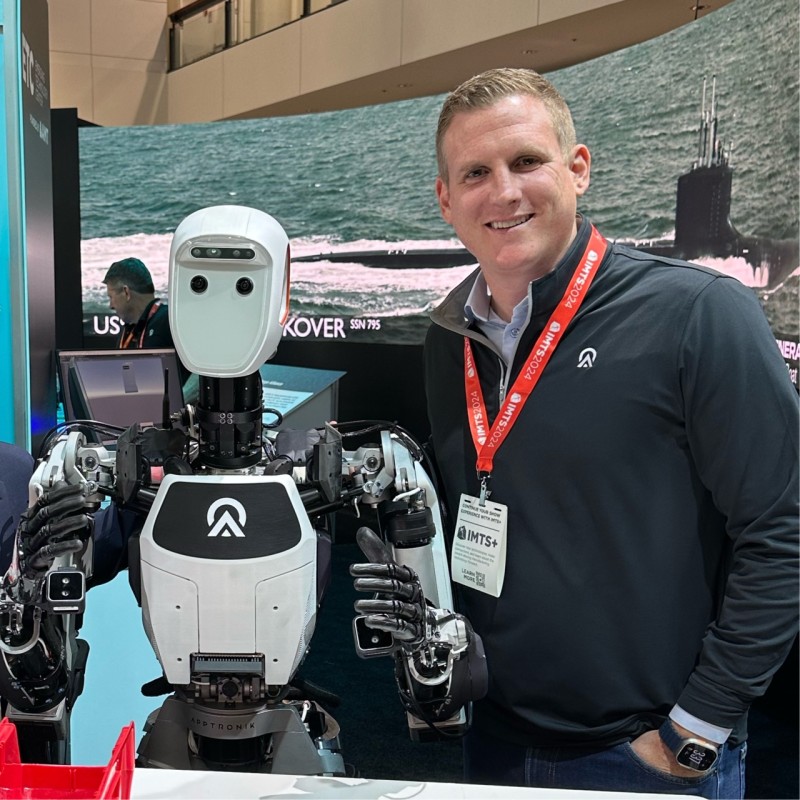
Building the Apollo humanoid. Selling to manufacturing enterprises. Nearly invisible on LinkedIn.
“Why we're building humanoid robots for warehouses, not homes. This single post would differentiate Apptronik from Figure's consumer play and give every logistics VP evaluating humanoids a reason to reach out.”

Some strong historical posts but last one was 5 months ago. A 489-day posting gap means he's invisible when buyers search for autonomous forklift solutions. Fortune 500 warehouse directors are having the conversation without him.
“3 things I learned deploying robots in a Fortune 500 warehouse that no one talks about. Showing up with deployment-specific insights immediately positions you as someone who's done it.”

Only 4 posts in 2+ years but each one lands hard — 136 avg likes and genuine audience interest. The content quality is excellent; the problem is pure absence during a clean energy boom.
“We replaced 4 workers on a solar install crew with 1 robot and 1 operator. Here's what the first 90 days looked like. The solar industry is desperate for this story.”

Posts regularly about medical robotics but getting less than 1 comment per post. The content reads like press releases, not insights. Hospital decision-makers scrolling LinkedIn aren't stopping.
“An ER doctor told me they lose critical seconds during intubation because the tools haven't changed in 50 years. Here's what we built. The pain narrative practically writes itself.”

Partnership with General Catalyst. Strong credibility. Posts once every few months. Plant managers who need affordable cobots never see him.
“We put a robot on a factory floor in 15 minutes. No programming. No integrator. Here's the 60-second video. His product's entire pitch is simplicity - showing it beats explaining it every time.”
The fix isn’t complicated. It’s not “become an influencer.” It’s: post 2-3 times a week about the problems your buyers face, share deployment learnings, and comment on the conversations your buyers are already having. 30 minutes a week. That’s the difference between F and B.
The fix isn’t “become an influencer.” It’s: show up where your buyers are, 30 minutes a week.
The 5 Patterns That Separate Founders Who Reach Buyers From Everyone Else
The top scorers don't just post a lot — they have strong, debatable opinions. These create conversations where buyers engage, not just scroll.
Edward Mehr has far fewer followers than some C-graded founders, but scores 8/10 on ICP fit. The right people reading your content multiplies everything.
Founders with high comment-to-like ratios (>0.10) are generating buyer conversations. Low ratios = passive scrolling. Comments are where deals start.
The highest-scoring founders comment on others' posts in their ICP's feeds. You show up where your buyers already are.
"CEO at [Company]" tells your ICP nothing. "Helping manufacturers cut labor costs 40% with autonomous robots" tells them everything.
Where Do You Fall?
We built a free tool that scores your LinkedIn using the same 6-dimension framework from this study.
Paste your URL. See your score in 15 seconds.
See How You Score →Methodology
We scored each founder across 6 weighted dimensions using AI-powered analysis of their public LinkedIn data: Audience Quality (25%), Authority Positioning (20%), Reach & Engagement Quality (15%), Content-ICP Fit (15%), Profile Optimization (15%), Posting Consistency (10%). Data sources: LinkedIn post analysis (30 most recent posts per founder), engagement metrics, commenting activity, website scrape for ICP identification, and Exa search for authority signals. All data is publicly available.
Co-Founder of Crescendo. Helps robotics founders get in front of buyers through positioning, content strategy, and outbound.